
Developmental history
Structured caregiver interview
Pregnancy and birth, milestones, medical and family history, daily routines, and what you have noticed and when. The foundation everything else is read against.

The evaluation
A diagnostic evaluation is not a test your child passes or fails. It is a structured way of answering a specific question about how your child is developing, and it should leave you with more clarity than you arrived with.
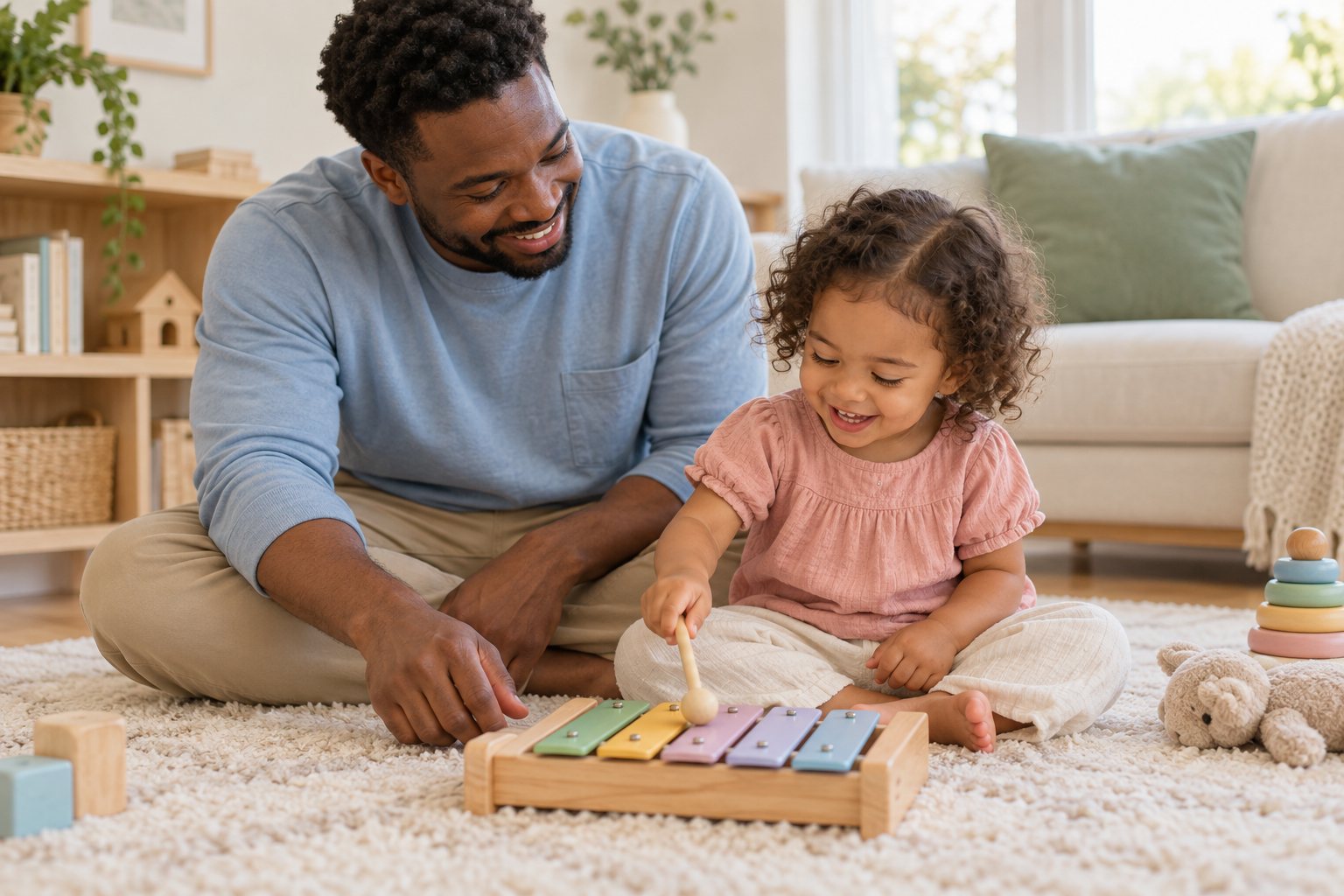
 Child at play · photo coming
Components
Not every child needs every piece. Your clinician chooses the measures after the intake call, based on your child’s age and the question we are answering.
The diagnostic battery
A standard battery, selected and interpreted by a licensed psychologist and adjusted to your child’s age, language level, and the referral question. Every measure is standardized and validated, and every one has a format suited to secure video.
Structured caregiver interview
Pregnancy and birth, milestones, medical and family history, daily routines, and what you have noticed and when. The foundation everything else is read against.
Developmental Profile, Fourth Edition
A norm-referenced picture of development across physical, adaptive, social-emotional, cognitive, and communication domains, compared with same-age peers.
Behavior Assessment System for Children
Caregiver and, with your permission, teacher rating scales covering attention, activity level, anxiety, mood, social skills, and adaptability. Surfaces co-occurring concerns and strengths.
Adaptive behavior
How your child manages everyday skills: communication, daily living, socialization. Adaptive scores often decide service eligibility, so we match the measure to what your insurer or district requires.
Childhood Autism Rating Scale, Second Edition
A clinician-rated autism measure completed from direct observation and caregiver report. Covers the same domains as structured observational tools such as the ADOS and quantifies autism-related features.
Telehealth autism observation
A structured observation protocol built for diagnosing autism in toddlers and preschoolers over video. The clinician guides short play activities at home and rates social communication and play in real time.
When screening suggests a language disorder, global developmental delay, or another explanation, we add or substitute measures and refer out where a deeper look is needed.
Time commitment
Most evaluations are completed across two sessions. We keep each one short enough for a young child to stay comfortable and engaged, even if that means adding a session.
Really. A comfortable child shows us far more than a hungry, overwhelmed one, and nothing about the day is a performance.
How it happens
The interview, the direct assessment with your child, and the feedback session all happen remotely. There is no clinic visit at any stage.
 Consented photo library · placeholder
A one- to five-year-old behaves differently in an unfamiliar room with an unfamiliar adult. Seeing your child at home, with their own toys and their own routine, usually gives a truer picture than a clinic could. It also spares everyone the drive, the waiting room, and the difficult morning that often comes with them.
Before the first session we send a short guide on setting up the room and which toys to have nearby. There is nothing to rehearse and nothing your child needs to prepare.
Is this the right fit?
If we are not the right place, we tell you on the intake call and point you somewhere that is. That conversation is still free.

Bring it to the intake call. It takes thirty minutes, it is free, and there is no obligation to book anything afterward.